Syndego LLC
Applications

Wherever heat gets in — or needs to stay out.

EnigMAT goes where the temperature difference is largest: under roofs, above ceilings, inside walls, around cold rooms and behind solar panels. One technology, with a transition point chosen for each job.

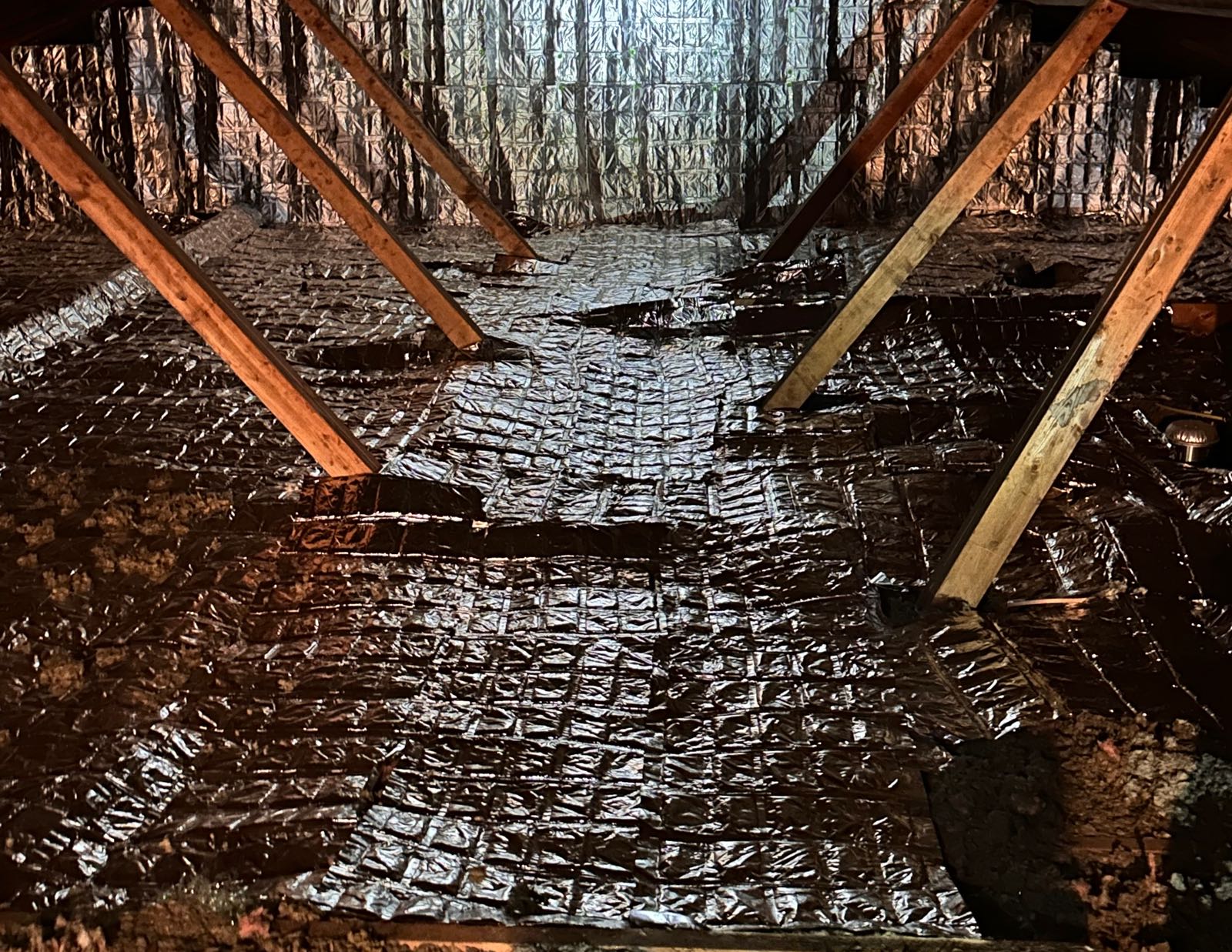
EnigMAT mats laid over the existing insulation of a residential attic
Residential

Homes & attics — stop making ice cream in the oven.

Summer attics reach 130–160 °F. When the air handler and ductwork live up there, the cooling system is fighting the hottest place in the house — and the air in the ducts heats up before it reaches the rooms. Piling on more floor insulation leaves that problem where it is.

EnigMAT is laid directly over the existing insulation, or stapled under the roof deck. Its reflective film turns back radiant heat from the roof; its core absorbs what remains without heating up.

  • Lower peak attic temperatures — 20–30 °F reported on hot, sunny days.
  • Cooler equipment and ducts — less duct heat gain, shorter runtimes, longer equipment life.
  • Installed in an afternoon — no tear-out, no settling, no dust, nothing buried.
< 77 °Findoors all summer in a one-year field study of an existing Southeast home, with attic heat above 104 °F
≈ 70 °Flowest indoor temperature the following winter
Education

Schools & portable classrooms

Heat is not only a comfort issue — it is a learning issue. A study that followed 10 million students found that each 1 °F of extra heat over a school year without air-conditioning reduces learning by about 1%. Portable classrooms make it worse: thin envelopes, high solar gain, and occupancy that jumps from 15 to 35 students within the hour.

EnigMAT goes above the ceiling tiles or inside wall assemblies during a retrofit, adding thermal mass to buildings that have almost none. The HVAC system keeps its job — it just stops chasing every peak.

  • Installed overnight or over a weekend — no lost class time.
  • Steadier rooms through occupancy swings, breaks and aggressive night setbacks.
  • Start with one room — a treated classroom and a matched control, measured side by side.
≈ 28%HVAC energy savings, weather-normalized, across 10 public schools in California
3–5 hinstallation per school, above the ceiling tiles, at night
Crew installing EnigMAT on wire mesh under a metal roof
Public safety

Correctional facilities

Housing areas are homes around the clock for inmates and workplaces for officers and staff on every shift. Where air-conditioning is years away, EnigMAT lowers the heat now; where it is coming, it shrinks the equipment the program has to buy.

  • Behind the finishes — above ceilings, under roof decks, inside wall linings; nothing to tamper with.
  • No power, no moving parts — nothing to maintain, nothing to break.
  • Class A fire rating — ASTM E84.
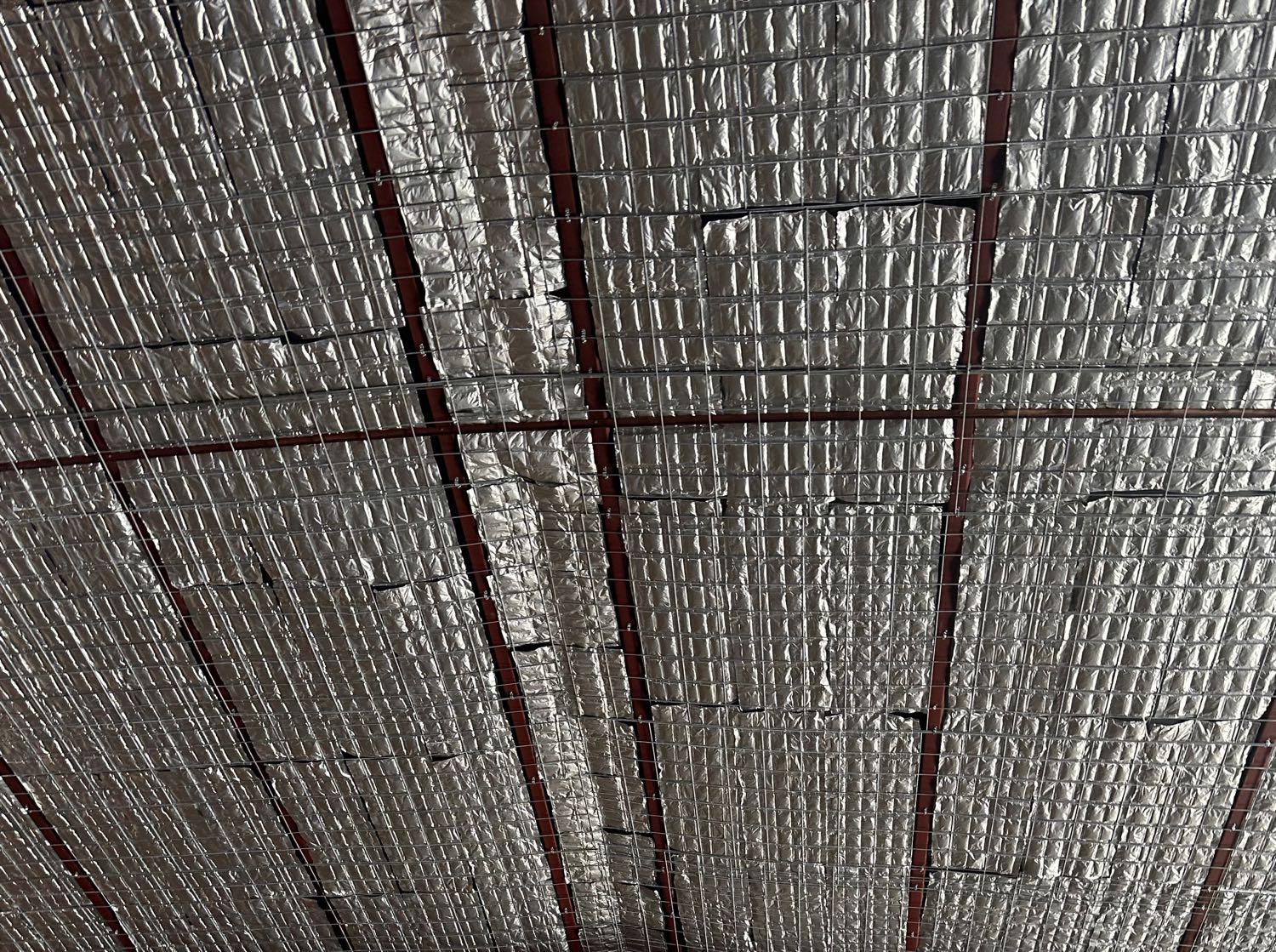
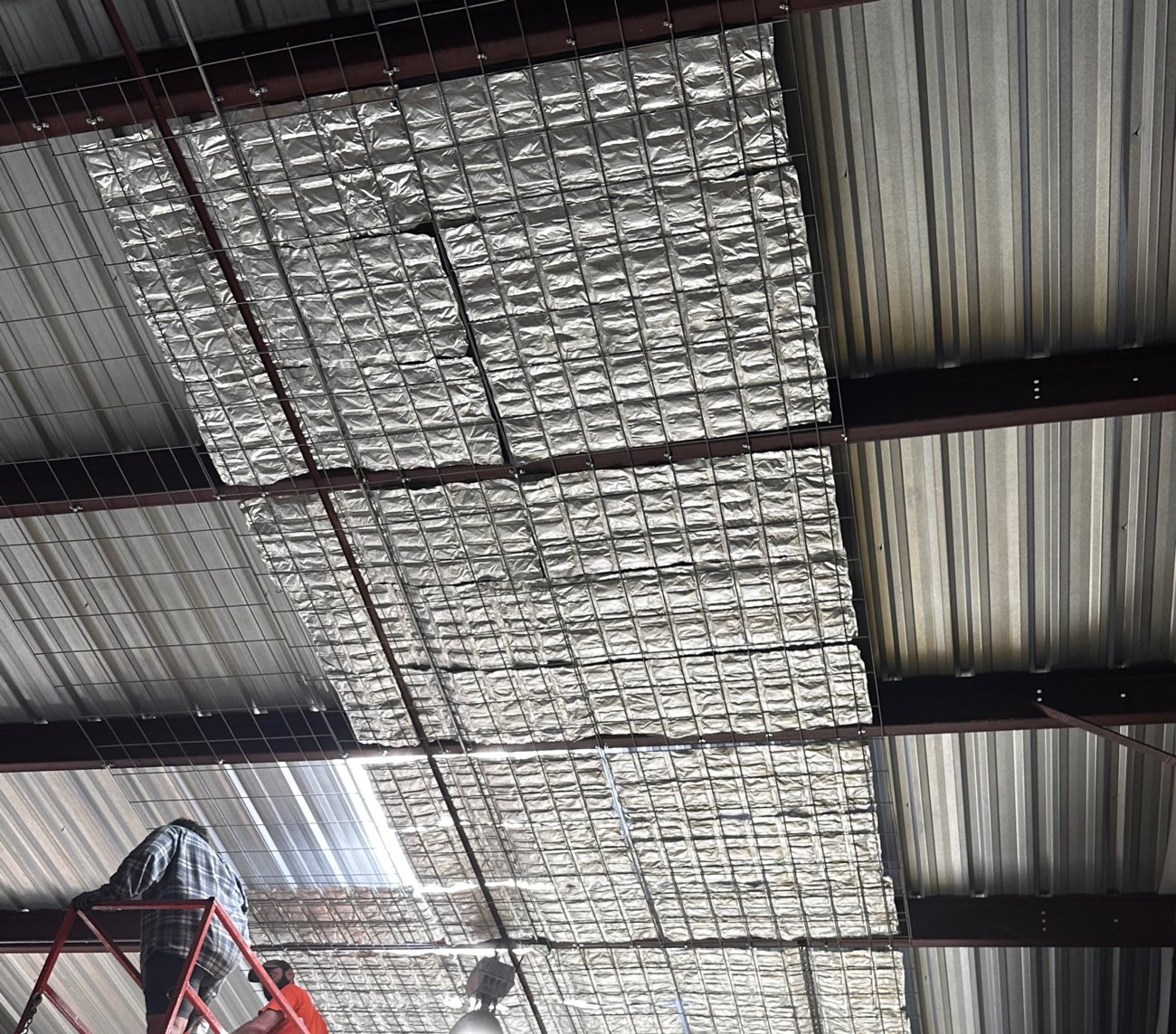
EnigMAT mats on wire mesh under the metal roof deck of a large building
Industrial & commercial

Metal buildings, warehouses & plants

On a summer afternoon the underside of a metal roof deck can read over 150 °F — and radiates that heat straight onto the people working below. EnigMAT is supported on wire mesh under the deck, laid on suspended ceilings, or installed during re-roofing.

  • Worker comfort and safety under hot metal roofs.
  • Lower peaks for the cooling plant — or livable space where there is no cooling at all.
  • Re-roofing without tear-off — laid over the old roof before the new one goes on.
> 20 °Flower peak temperatures under a 221,000 sq ft metal roof deck at a manufacturing plant
≈ 8 °Flower hourly averages at worker level
≈ 10 °Fcooler, with no A/C, in a 5,000 sq ft Texas metal building through 50 straight days above 100 °F
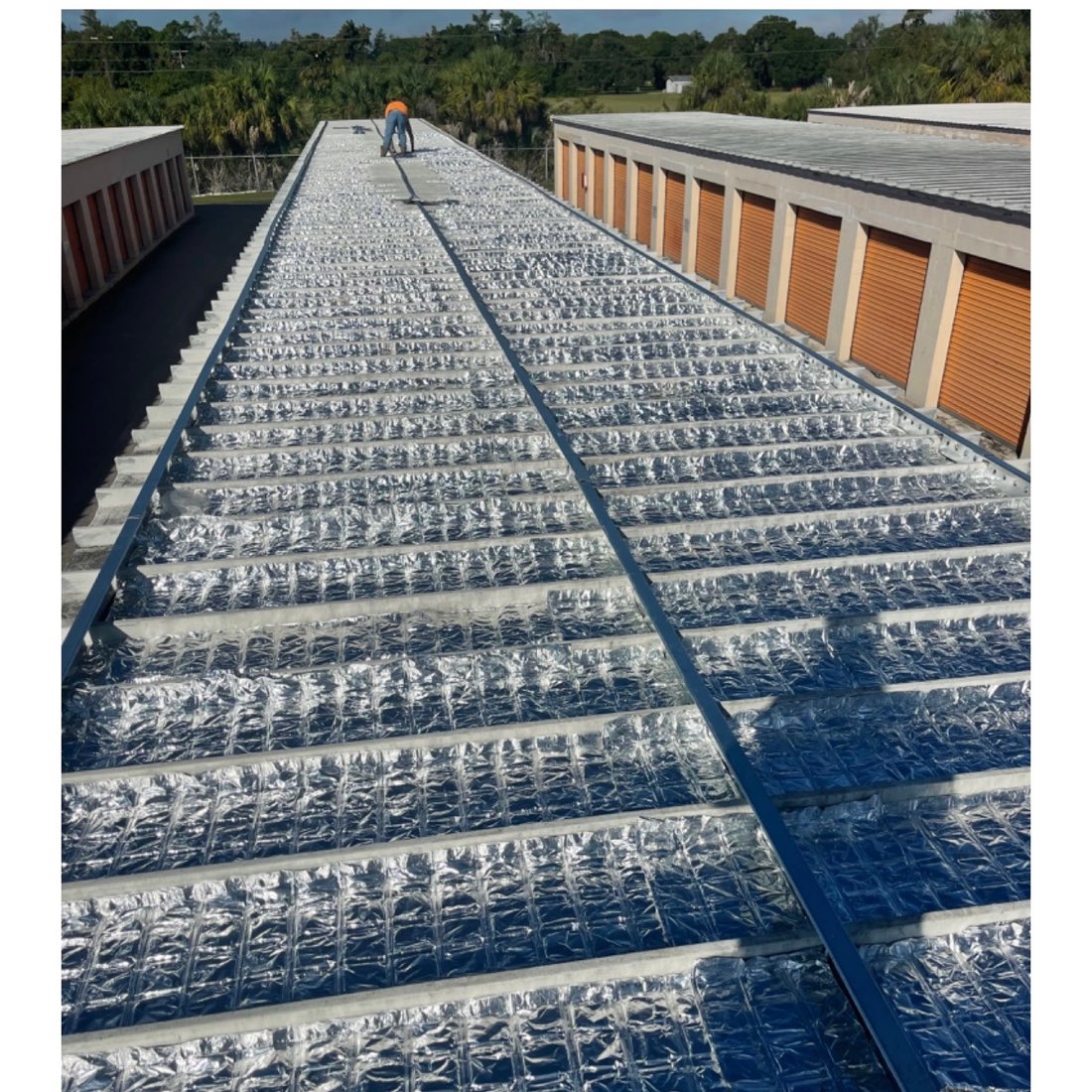
EnigMAT laid across the roof structure of a self-storage building
Self-storage

Self-storage: a third option

Storage operators usually offer two products: climate-controlled space and drive-up units. At a facility in Ruskin, Florida, EnigMAT was added to 46 drive-up units — laid on new suspended ceilings or over the old roof during re-roofing — to see whether they could hold conditioned-space temperatures with no HVAC at all.

  • Temperatures held within the ranges local climate-controlled operators guarantee.
  • No electricity needed to keep them there.
  • Near-full occupancy for the upgraded units.
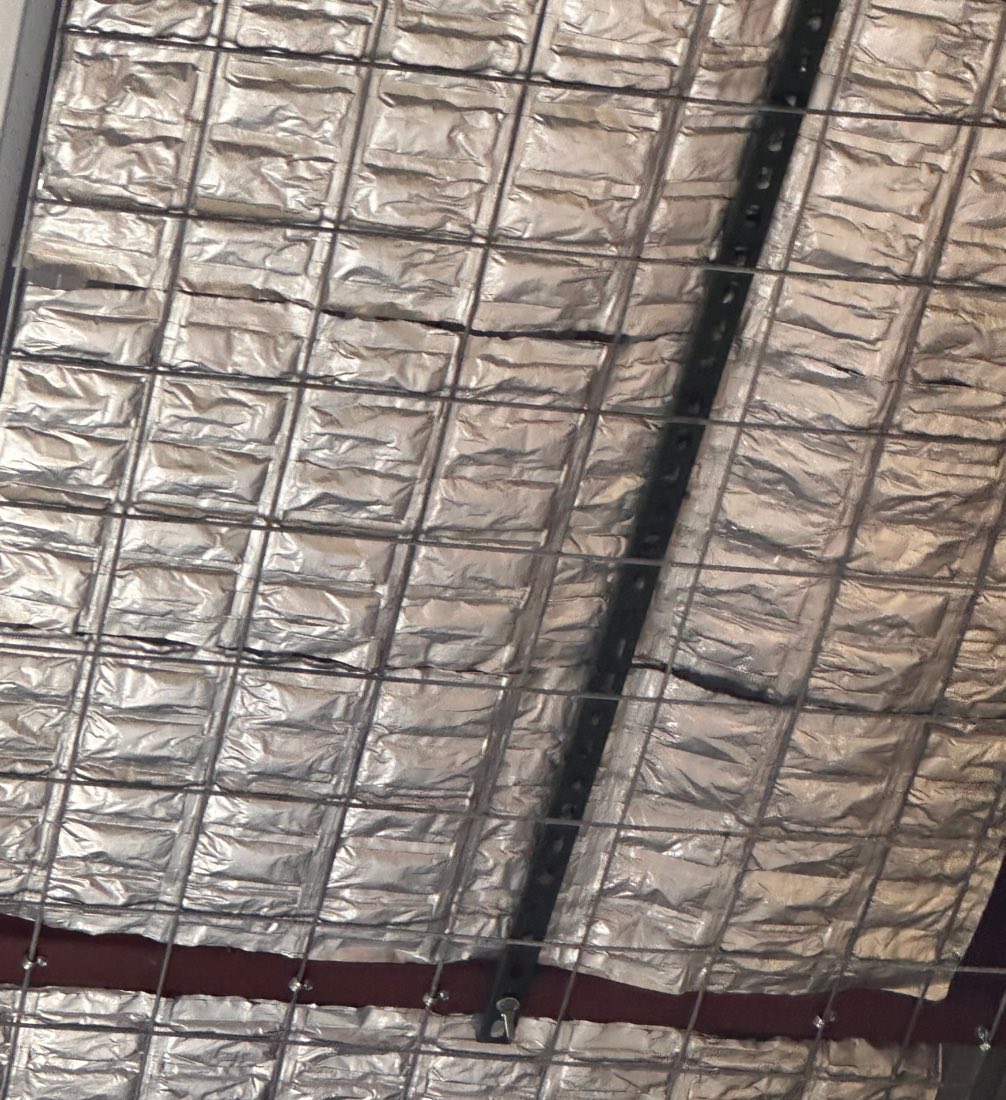
Close-up of EnigMAT mats
Offices · clinics · retail

Commercial buildings & drop ceilings

Turn an ordinary suspended ceiling into thermal mass. EnigMAT is laid directly on the existing ceiling tiles in the plenum — no construction, no job site, no downtime. By day it absorbs excess room heat; at night it gives it back, ready for the next day. It exchanges heat with both the room and the plenum, so the whole building feels it.

  • Offices, labs, schools, clinics, senior-care facilities, retail and light industry.
  • More efficient HVAC operation — fewer peaks, fewer cycles.
  • Installed to local fire and building codes — ceiling-grid loads and sprinkler rules are checked for every project.
Envelope

Walls — including metal-stud walls

In a wall cavity, a counter-wall or a dry-clad facade, EnigMAT caps the temperature the wall can reach and delays the heat that gets through. In metal-framed buildings there is a hidden leak: steel studs carry heat straight past the insulation, like metal zippers through a down jacket. Thin EnigMAT strips applied to the studs before the drywall goes up act as a thermal break that also stores heat.

  • No more cold streaks on walls over the studs.
  • Drier walls — steadier stud temperatures reduce the risk of condensation.
  • Smaller peak loads in new construction, and a thinner wall for the same performance.
Cold chain

Coolers, freezers & refrigerated transport

Cold grades of EnigMAT change phase below freezing — for coolers held at 32–50 °F and freezers down to about −9 °F. Lining walls, ceilings and doors of cold rooms, refrigerated boxes and containers, they absorb the heat that leaks in and the surges from door openings, so the compressor runs less and cycles less.

  • A passive thermal battery — if power or equipment fails, the stored cold buys time for the goods.
  • Steadier product temperatures through loading, door openings and defrost cycles.
  • No added mechanical, hydraulic or electrical parts.
Mission-critical

Data centers, telecom shelters & electrical rooms

Cooling is one of the biggest loads in a data center, and heat surges are getting harder to predict. EnigMAT thermal blankets laid on drop-ceiling tiles or in return-air plenums absorb hot return air before it reaches the cooling units; they can also line hot-aisle containment, perimeter walls and roofs, and UPS and battery rooms.

  • Buffers short spikes — fewer compressor calls, fewer cycles, steadier halls.
  • Ride-through — during an outage the blankets slow the temperature rise while backup power comes online.
  • Transition point a few °F above supply air, inside recommended data-center ranges.
Energy

Under solar panels

Heat is the hidden enemy of solar. Every °F of cell temperature above 77 °F takes away roughly 0.2% of efficiency, and at midday modules reach 140–158 °F — just when their power is worth the most. A phase-change layer on the back of the module absorbs that midday peak at constant temperature and releases it overnight.

  • Published research on phase-change backings for PV measured 6.8% more energy over a 47-day outdoor test, with backsheet peaks about 47 °F lower.
  • Fully passive — no wiring, no plumbing, no moving parts.
  • Double benefit on rooftops — under the modules and in the building envelope below.

Module-level applications are designed together with the module manufacturer to protect product warranties and certifications.

Modular · field · emergency

Modular buildings, field shelters & containers

Thin skins and metal panels let tents, containers and modular buildings run 27–36 °F hotter than the outside air. EnigMAT goes into tent liners and into the roof and wall panels of containers and shelters, blocking heat before it reaches the metal — without reducing usable volume or slowing deployment.

  • Less generator fuel and smaller HVAC units in the field.
  • Livable nights in desert and mountain climates, as stored heat is released gradually.
  • Modular classrooms, offices, clinics and emergency housing that stay comfortable from day one.
Agriculture

Livestock barns

Pigs cannot sweat. Outside roughly 64–77 °F they eat less, grow slower and convert feed less efficiently — heat stress is a welfare problem and a profit problem. EnigMAT on barn ceilings caps the temperature at its transition point by day and returns the heat at night, with zero electricity.

  • Up to 16 °F cooler at summer peaks and up to 13 °F warmer at winter lows, in a side-by-side study of two identical pens over full growth cycles.
  • Heat-stress days at 84 °F or above: 19 → 0. Cold-stress days at 61 °F or below: 6 → 0.
  • 21% less heating energy in winter.
Not sure where it fits?

Tell us about your building. We'll tell you where EnigMAT works best.

Every project starts with the climate, the building and the goal — then a transition point, a placement and, where it makes sense, a measured pilot.